Celia Hart's blog about what's going on in and around her studio.
Art, printmaking, inspirations, gardening, vegetables, hens, landscapes, wild flowers, East Anglia, adventure, travel.

Monday, 19 November 2007

A Potato Pagoda for Freddie

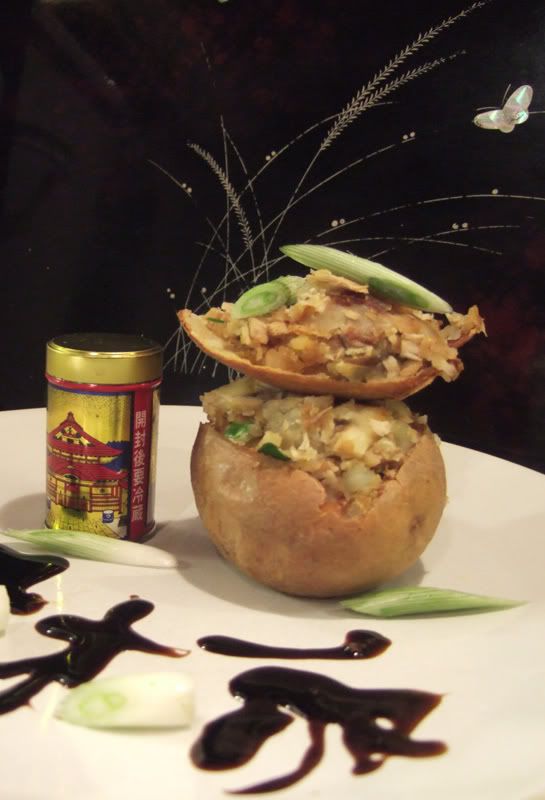
I'm not one for dressing up a baked potato, so when I was invited by Freddie and Charlotte to join The Great Big Baked Potato Challenge I wasn't inspired. But as my systematic advance through the tidal wave of work in my studio was going well and on schedule I had time to be creative with my supper of baked potato and Sunday leftovers before I go to the Tai Chi class.


Here's how to make a Potato Pagoda . . .

Cut a wedge shape out of the baked potato and carefully scoop out the cooked flesh from both pieces. Stir fry mushrooms, cooked guinea fowl (chicken will do fine), shredded fresh ginger and chopped spring onion. Gently mix in the potato flesh and season, I used my favourite Japanese 7-spice 'Shichimi'. Cook through and season with soy sauce. Fill the potato skin and the wedge with the mixture and balance the wedge on top. The calligraphy on the plate was intended to read 'Tai Chi' - but it probably doesn't!

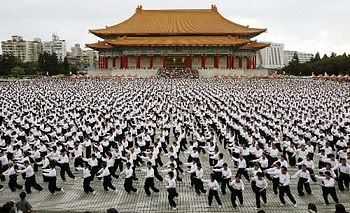
And after that deliciously warming supper it's time to go to Tai Chi . . . Step-back-and-repulse-the-monkey . . . The-golden-cockerel-stands-on-one-leg . . . Box-the-tiger's-ears . . . I feel calm, balanced and grounded :)

Sunday, 18 November 2007

Backstage


Behind the display on my stand at Saturday's Arts & Crafts Fair in Reach Village Hall, my supply of small change was efficiently tidy and I was sustained by the delicious (and nutritious) flap-jacks and the unbelievably delicious mulled fruit juice*.

Thank you to everyone who came along!


LATEST NEWS:
In two weeks time on Saturday 1st December I will have a stall at the Arts & Crafts Fair in Saffron Walden Town Hall.
So if you're in the area why not get in the festive spirit in this historic market town - lots of lovely shops, delis, cafés and the traditional market in the square outside the Town Hall.


* The girls in the kitchen told me it was equal quantities of apple juice and orange juice with some thinly peeled orange and lemon skin (peel? zest?) and sachets of mulling spices. Heat through and serve. Other versions they recommended use black grape juice with the apple and orange and an orange studded with cloves, cinnamon sticks and fresh ginger.

Wednesday, 14 November 2007

Celebration treats!


The under-gardeners are one year old this week (we don't know the exact date they hatched - but they were 17 weeks old when they moved in). Today we enjoyed an enthusiastic lunch time gardening session which involved me digging ground elder roots from the border near the Dragonfly Pond and the under-gardeners pouncing on any unsuspecting creepy crawly that had been disturbed.

Afterwards I decided they deserved a special birthday lunch . . .


Director's Notes:
Never work with animals! The corn was all set up ready and then Phoebe decided she just had to lay an egg (sigh!) so I decided to do some more gardening with the other under-gardeners until she'd done. Almost an hour later and rain clouds threatened - so I checked the hut and Phoebe is sitting there playing with bits of straw. I gently lifted her out (no egg yet) and herded all four hens towards the veg garden and the film set. Just as they got to the garden door the regular flight of Apache helicopters arrived for their daily low-level fly past - good timing chaps! The hens froze and backed out of the veg garden. Eventually got them calmed down and back on set - this was a one-take movie!

Sunday, 11 November 2007

Christmas Arts and Crafts Fair


I've been busy getting everything together for my stand at next Saturday's Christmas Arts and Crafts Fair at Reach. I will be selling Festive Tree Decorations, gift tags, hand bound notebooks , framed and unframed prints and cards.

Emma has been working hard planning this event and has invited a fantastic range of talented artists and makers to take part. So as well as my prints and designs and Emma's beautiful silver jewellery there will be baskets, indigo dyed textiles, photographs, pottery, stained glass, paintings and much much more! And if you can come along you get to enjoy some of Cambridgeshire's best home baked cakes and biscuits accompanied by steaming cups of tea or mulled wine - all in the lovely renovated Village Hall right in the heart of the historic village of Reach at the end of the ancient earthwork, The Devil's Dyke. A local legend is that the Devil came unannounced to a wedding at Reach church and was chased away by the guests. In anger the devil ran away and formed the groove of the Dyke with his fiery tail!

STOP PRESS . . .
opening soon - my online shop - details on the blog very shortly.

Monday, 5 November 2007

Fireworks display


The English love to discuss the weather and 2007 gave us lots to talk about . . . 'Summer' was in April; May to the end of August was . . . er . . . well . . . let's put it politely . . . dull and wet; but now the garden, and countryside, is putting on a cracking early November display with dazzling bursts of colour - a fizzing zingy end to the gardening year.

Clockwise from top left:
• wild bullace trees in our boundary hedge
• red flower spikes of polygonum amplexicaule and wisteria leaves
• a cactus flowered dahlia
• cornus sanguinea 'Midwinter Fire'
• spindle berries (euphorbia europeans)
• fuchsia 'Thalia'

Friday, 2 November 2007

Kicking up leaves


The summer is over,
The trees are all bare,
There is mist in the garden
And frost in the air.
The meadows are empty,
And gathered the sheaves,
But isn't it lovely
Kicking up leaves.

John from the garden
Has taken the chairs,
It's dark in the evening
And cold on the stairs.
Winter is coming
And everyone grieves . . .
But isn't it lovely
Kicking up leaves.

by Rose Amy Fyleman 1877-1957

Wednesday, 31 October 2007

URGENT! for your immediate attention . . .


She's soooooooh busy this week! What does a studio-assistant need to do to get some attention around here? :)

Thursday, 25 October 2007

Pumpkins. . . Squash. . . Cucurbits. . .

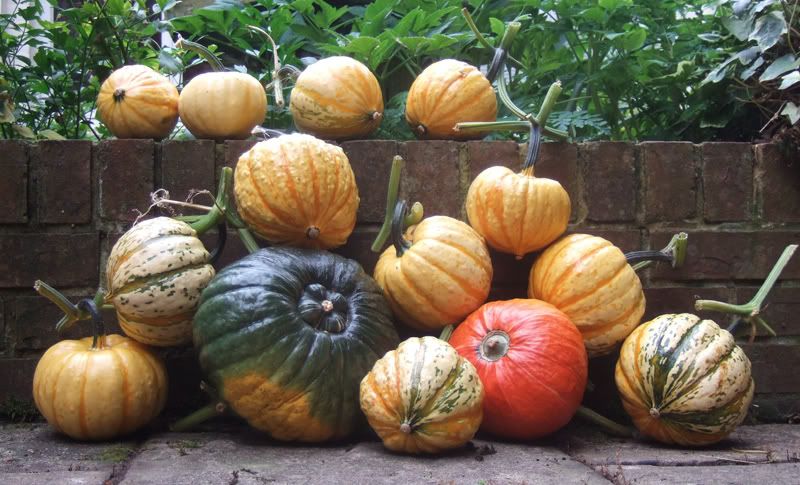
Whatever you call them they are the vegetable of the season. This is our 2007 Squash Harvest. The huge dark green one is the fabulously tasty "Zucca Marina di Chioggia" (and with a name like that so it should be!), such a shame there's only one. The lovely stripy yellow ones are "Winter Festival" - not quite as flavourful but a good size to cook stuffed. The lovely dark orange one with the grey/green centre was a bit of a surprise! Either I lost the label or it was a rogue seed. If anyone recognises it, please let me know.


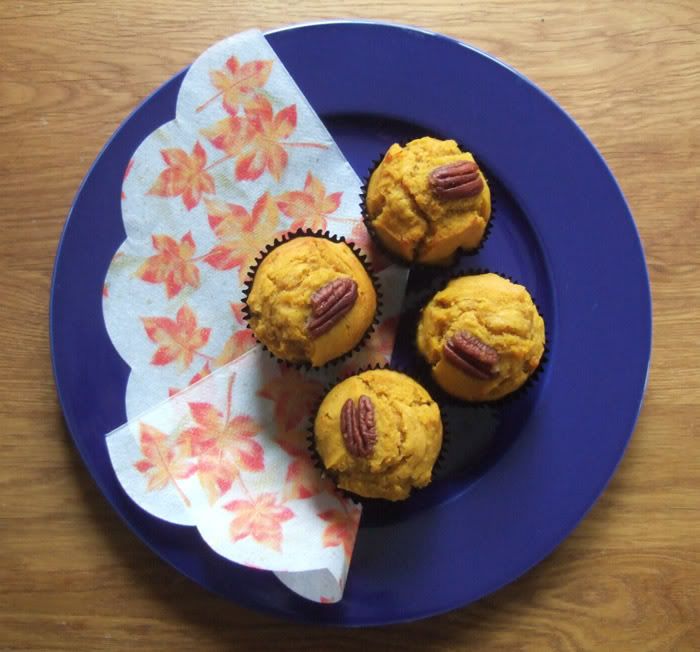
On a cold dark autumn evening what could be better than squash risotto, or squash and potato mash, or squash soup, or squash added to a curry or tagine, or these squash, raisin and pecan muffins.


Hannah has requested that I post the recipe (I'm in awe of Hannah's baking skills, so if you want to see some treats visit her blog). So here goes, I haven't time to unscramble the mixed measurements - this is just how I do it!
In a bowl sift 5 oz plain flour (I used half wholemeal/half white), half a desertspoon of baking powder, 1 and a bit oz caster sugar and a sprinkle of mixed spice.
In another bowl put 2 eggs, a third of a cup of sunflower oil, two thirds of a cup of semi-skimmed milk, about two cups (I didn't measure this) of cooked squash (I bake squash in the oven then de-seed and skin). Beat together with a balloon whisk.
Sift the dry ingredients into the wet ones. And fold gently together, add some raisins as you do this, you must not stir too much, leaving bits unmixed is good.
Spoon into muffin tins and decorate with pecans. Cook at about 190 C until they have risen and smell delicious and a bamboo skewer stabbed into the middle comes out clean! Enjoy!

On 30th October 2007 that amazingly talented gardener, Matron of 'Down on the Allotment', is hosting a Squashblog, a chance to see cucurbits of every shape and colour from garden bloggers around the world!

31st October 2007 . . .
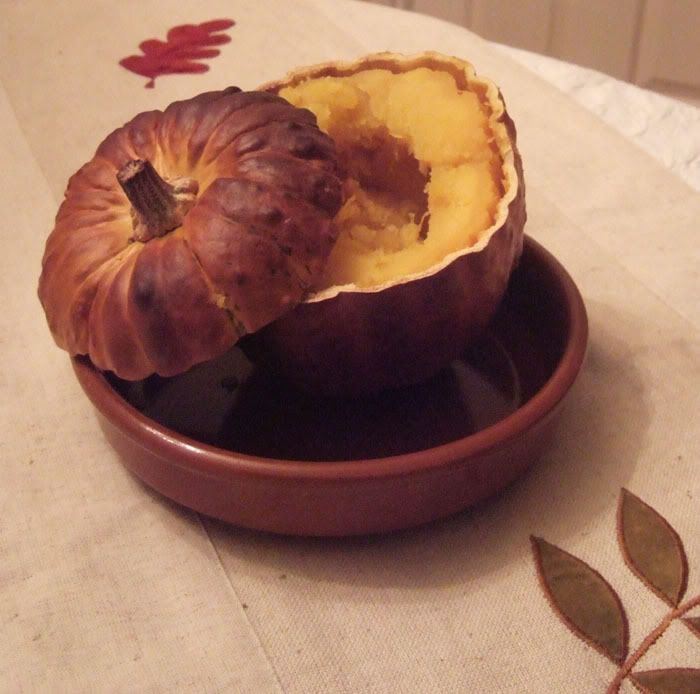
And this is our Halloween Pumpkin - a "Winter Festival" squash baked whole in the oven. Carefully cut off the lid and scoop out the seeds and fill with the flesh from the lid . . . and . . . izzy-whizzy!!!*!*!*!*!*! An instant ready-filled pumpkin tureen!

Thursday, 18 October 2007

'Leaf Doodle' papers

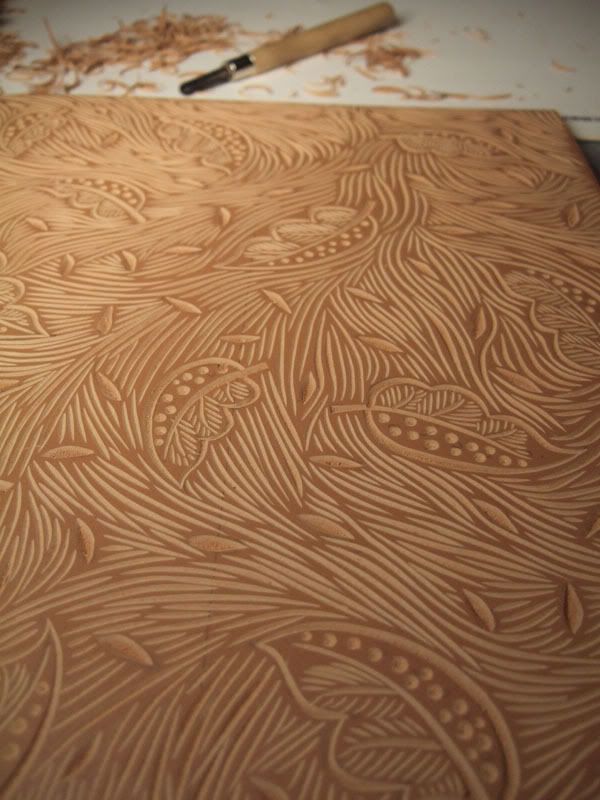
It's intriguing how marks made by tools are like handwriting - the identity of the maker is displayed. It's the use of favourite tools in a specific satisfying way that results in a personal visual language. I've been doodling on a block of lino, a quick scribble with a pencil then cutting with my favourite little cheap chinese cutting tool. Last month I saw some stunning eighteenth century crewel embroidered hangings at Nunnington Hall in Yorkshire and I think they must have been in the back of my mind; first I cut the large leaves, then the little seed shapes, I filled the background with flowing lines letting the tool make the tapering shapes like a calligraphy pen.


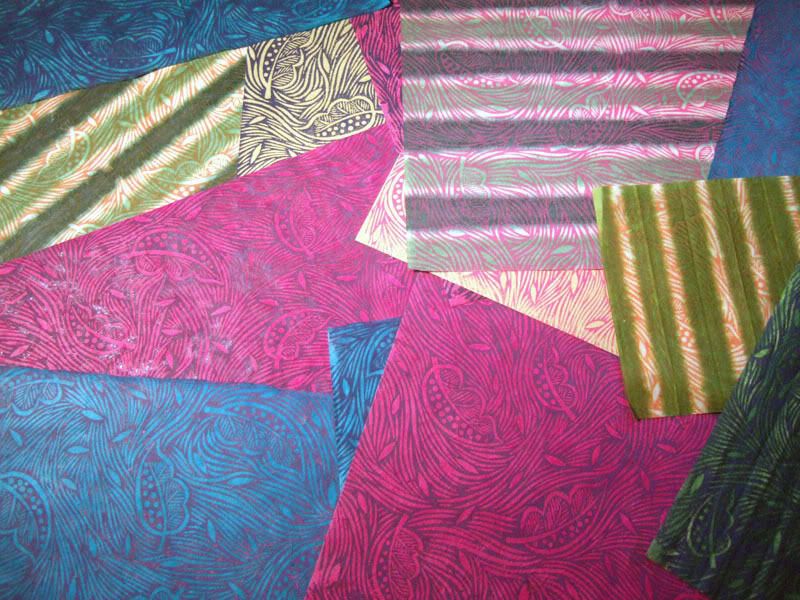
I used the block to print Indian and Japanese coloured papers in pink, orange and indigo.


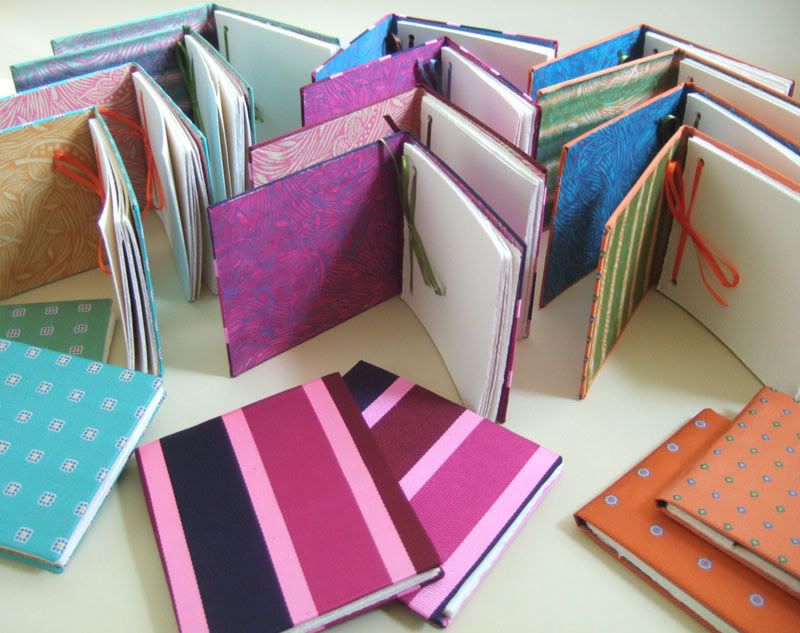
And this is why I needed printed papers - endpapers for some little books bound in Sudbury Jacquard Silk. A good excuse for enjoying using my Victorian Copy Press to press the covered book boards.

Tuesday, 16 October 2007

20 years ago today . . . it was a bit windy

October 16th 1987
I had slept through the sound of the biggest storm to hit Southern England for 300 years, even though my flat was on the top floor. But I knew something was up when I turned on 'Today' on Radio 4 and they seemed to be broadcasting from a torchlit studio in a bunker in an apocalyptic wasteland! I was working for a publishing company in Harlow, Essex and I decided to take the main road to work rather than my usual countryside route, in case of fallen trees. Huge branches dangled precariously over the cars and terrified horses galloped around the commuter traffic jam. At the office the power was off but in true "spirit of the blitz" fashion the canteen staff had somehow made bacon sandwiches for the plucky few who made it to their desks!

It was far worse south of London, an estimated 15 million trees had been uprooted by winds gusting to over 100 miles/hour and the parks, gardens and countryside had been changed forever.

Do you have a Great Storm memory?

Friday, 12 October 2007

An intruder in the vegetable garden

There are signs that an intruder has been walking over the raised beds in the vegetable garden. Neat triangular hoofprints.


The studio assistant was keen to show me that her paws could not have made the prints - she has been ruled out of the inquiry.


This is the main suspect.

Tuesday, 9 October 2007

Shhhh! we're hiding!

The studio assistants had arrived for 'work', but had disappeared. I could hear Chester snoring, and had briefly searched the office without success (he sometimes sleeps behind the printer). The weather has suddenly changed from glorious Autumnal sunshine to drippy grey drizzle and the forecast says it's set in for the rest of the day, it's the sort of day when a cup of hot tea is essential for creativity. On my way to the kitchen I spotted two furry tassels* at the bottom of the sashiko throw that's covering a small bookcase!


I discovered Sashiko on my visit to Japan a few years ago. While in Takayama I found bundles of indigo dyed fabric remnants for sale in a market; later, in a street of traditional wooden buildings I came across a shop specialising in sashiko - so I bought some thread and a folder of patterns. Back home I transformed the fabric remnants into a sampler of sashiko stitching - my Takayama holiday souvenir.

* For those of you who have read the tale of the tail, you may have noticed that Chester now has a magnificently fluffy ginger tail of which he is very proud.

Friday, 5 October 2007

Sculptural Romanesco


There's a vegetable stall in a farm gateway on the outskirts of one of the fen-edge villages I often drive through, and this is my favourite place to shop for fresh local veg. The stall (a converted shed) has been closed for the summer (holidays and harvest time), but today it was open. For £5 I bought a bag of large red onions, a bag of parsnips, a huge bunch of extra long leeks, 3 giant sweetcorn and this - a beautiful Romanesco Broccoli or Summer Cauliflower. What a fantastic geometric sculpture of a vegetable!

I've just finished reading Seed to Seed: The Secret Life of Plants by Nicholas Harberd and as I drove home I began to think about the sequence of growth that must have created the Romanesco flower head. I'd picked the book up in a bookshop which had a "3 for 2" offer and needed another book to add to the latest "Number One Ladies' Detective Agency" story and a wartime romance for my mother; it looked intriguing and the blurb on the back had enthusiastic reviews by those respected gardeners Penelope Hobhouse and Anna Pavord. It's written as a diary over the course of one year and is an insight into the thoughts of a research scientist and his discoveries about how plants grow. Anna Pavord sums this up far better than I can:
'It's another world. Another language. But Harberd has the gift of connecting us with it . . . What Harberd's book gives us clueless amateurs is a huge sense of awe at the extraordinary and brilliant machinery that regulates plant growth'.

Monday, 1 October 2007

It's grand and wild up north!


We've been on holiday to the South and East Ridings of Yorkshire - starting off in Wakefield (not a place that springs to mind as a holiday destination, I admit). The reason behind this was to visit the Yorkshire Sculpture Park during its 30th birthday year and while the Andy Goldworthy exhibition was on. The magnificent parkland is a perfect setting for large scale sculptures like this one by Henry Moore; it takes over four hours to walk around the park and the galleries which are on opposite sides of the park two miles apart. The experience of walking up the steady incline to the Longside Gallery is like following a pilgrim route to a shrine, Andy Goldsworthy's work spanning the past 30 years is exhibited in all the galleries and there are three new outdoor installations in the park - including the "Hanging Trees" built into the sunken ha-ha wall along Oxley Bank. It's hard to pick out favourite works by Andy Goldsworthy because they are all uniquely intriguing, but the "Leaf Stalk Room" with its dividing curtain made of leaf stalks held together with thorns - beautiful and fragile like a perfect spider's web, and the vast self supporting structure "Stacked Oak" were the highlights for me.


We stayed at the Waterton Park Hotel, chosen for it's convenience for the Sculpture Park and they had a 'Special Offer'; we assumed we would have a room in the modern annexe but on arrival it was announced that our room was in the Georgian mansion on the island, the only access via a narrow bridge over the lake and when we entered our room we had another surprise - a grand four poster bed! (Unfortunately, no nice surprises with the food.)

Between the Hotel and Wakefield, tucked behind suburban streets is Sandal Castle - we saw a postcard in the Wakefield Tourist Info Office and decided to take a look. This was Richard III's dad's castle - and local tradition says he was 'The Grand Old Duke of York' and his castle stands at the top of the hill he marched up and down with his ten thousand men before losing the Battle of Wakefield to Margaret of Lancaster (all described by Shakespeare in 'Henry III part iii').

We sheltered from the wind in the Sandal Castle Visitor Centre where the knowledgeable man at the desk recommended that we should visit Wakefield Museum as they have a gallery about Charles Waterton and Waterton Park where we were staying. I have to admit I'd never heard of Charles Waterton before last week, but as we were staying in his house we thought we'd find out more. Squire Waterton had ideas well ahead of his time - which gave him the reputation of being a complete nutcase - today he'd probably be on TV co-hosting 'Spring Watch' with Kate Humble! He travelled to South America to manage his family's sugar plantations and while there saw the amazing birds and animals of the rainforest, on his return he built a wall all round his estate to keep the poachers out and make a wildlife sanctuary; he enlarged the moat around his house to make a huge lake for water birds; he paid local children to bring him live hedgehogs to live within his estate; he planted dense hedges, left hollow fallen trees in the woods and was the first person to build nest boxes for birds of all kinds to nest in; he also invited the inmates of the local asylum to come into the estate to enjoy watching nature and he served them tea in a grotto.


There is now a Waterton Trail - a circular walk from Waterton Park following the route of the Barnsley Canal, through woodland and farmland to Anglers Country Park - this area was once one of the deepest open cast coal mines in Europe, now landscaped (the massive lake has a pond liner!) it is a haven for wildlife and open for anyone to enjoy. In the grounds of Waterton Park we looked for the grave of Charles Waterton and eventually found it overgrown with ivy and fallen branches - a squirrel has left the husks from his lunch of nuts at the foot of the cross.
In the 'Suggested Places to Visit' folder in the Waterton Park Hotel there was no mention of the Yorkshire Sculpture Park, Sandal Castle, Wakefield Museum or the Waterton Trail and Anglers Country Park (right on its doorstep).


Another reason for the location of our holiday was a visit to Scampston Walled Gardens near Malton and a chance to see the work of plantsman and designer Piet Oudolf - a master of modern design and exuberant perennial planting - and how a ten acre walled garden has been transformed into a series of nine 'rooms' each with a different character. All the plants are numbered and listed in a booklet (there are 1333 named plants!) - top of my list to plant in my own garden is Sedum 'Matrona'.

This is the 'Drifts of Grass' garden with wavy drifts of Molina grass constantly moving and rustling in the breeze.


The 'Perennial Meadow', with the yellowing leaves of the 'Katsura Grove' as a backdrop, was a mix of fading colours and complex textures.


We moved on to stay at a B&B at the Stained Glass Centre between Scarborough and Filey on the coast (warm, comfy and scrummy full English breakfasts). The Yorkshire coast is being constantly nibbled away by the surging North Sea, last week it was probably being munched in huge chunks! We escaped inland to a walk we knew well - Rievaulx Terrace. Orchestrating the landscape on a grand scale isn't new - 18th century Yorkshire landowners were keen to show off their wealth and the picturesque views they could create. In 1758 Thomas Duncombe III built a terraced promenade along an escarpment overlooking the ruins of Rievaulx Abbey (no need to build a folly - he had the real thing!), walking the length of the meandering terrace backed by woodland a series of vistas open up revealing a view of the Abbey in the valley below, each view like a perfect Claude Lorrain picturesque scene.


Wrapped up warm in hats and coats we went for a evening walk on the front at Filey - high tide and the waves are crashing into Filey Bay.


The next day we drove to Flamborough Head - a jagged headland jutting out into the North Sea and sculpted into stacks, bays and caves. Holding onto our hats and fighting to stand against the force of the wind we walked along the cliff top near the lighthouse - a plaque displaying a map of the coast noted "Here fought the British and American ships in 1779", good grief! Almost 228 years to the day since The Battle of Flamborough Head in September 1779, when the people of Filey and Bridlington gathered on the cliff tops to see the Continental Navy (French and American) under Commodore John Paul Jones, attack a British convoy of 44 merchant ships and two escorts - 520 British prisoners were taken, the merchant ships got away.


Along the coast south of Flamborough Head, Bridlington Old Town is enjoying a revival, it's Victorian High Street is a hive of creative activity - galleries and workshops side by side with the little bakeries, pubs and shops. This is the home town of David Hockney's family and his base when working on his Yorkshire landscapes. Fish and chips is the traditional fare (and served with excellent mushy peas) - but for a change we had lunch at Bean There where we had a huge platters of wholesome salads and quiche. The fantastic array of cakes on the counter looked very tempting - but we just couldn't fit them in!
In the evening we searched for a good place for the final dinner of our holiday - driving through the rain along the Scarborough to Pickering road we spotted an inviting looking inn, The Coachman. Taking shelter from the wild weather we realised we'd stumbled upon a charming jolly bar, full of people enjoying a Friday evening drink and the food was delicious - with a creative twist, the venison with lavender and blackcurrant was superb and the strawberry and port jelly was served with little meringues studded with pink geranium petals, dried fruits and nuts. We certainly dined in style!

Friday, 21 September 2007

Shades of indigo

At the Harvest Lunch in the village the conversation turned to the weather (inevitable in an English social situation) and its effect on our vegetable gardens. We agreed that it had been a very bad year for outdoor tomatoes and that no-one had a glut of courgettes. We also agreed that beans had done very well, but that the season for green beans was just about at an end – when I suggested using the mature beans shelled from the pods there was a pause in the chatter "Oh, can you do that?" someone said. Maybe I had overstepped the mark and alluded to a peasant style of cooking that civilized people had left long behind?


These beautiful shiny beans in shades of indigo are the semi-mature Poletschka beans (a climbling bean from Ukraine from the Heritage Seed Library) grown in our vegetable garden. Impressed by the tender and sweetly flavoured green pods I decided to save lots of seed for planting next year. But I had to try the flavour of the beans before they dried, after all flageolet beans - fresh haricot beans - are a gourmet dish in France traditionally served with lamb.

Supper last night was my nouvo-peasant recipe, "Chicken Poletschka":
Two large spring onions (scallions) chopped and cooked in a little olive oil in the trusty Le Creuset shallow 'buffet' casserole. Add skinned chicken joints, two whole unskinned garlic cloves, sliced mushrooms, cubed aubergine - home grown :), fresh shelled Poletschka beans, cook on a gentle heat until chicken is browned and the mushroom and aubergine lightly cooked. Lay slices of tomatoes over the top - home grown Marmande tomatoes :), and sprinkle with finely chopped fresh savoury, THE herb for beans, and black pepper. Add some boiled water to just below the level of the tomatoes. Cover and cook in the oven for about 45 minutes or until the veg has been prepared and cooked and "The Archers" has finished. Excellent accompanied with mashed squash and rainbow chard.

Poletschka beans cooked in a casserole or soup are plump and delicious, and the indigo colour turns a warm pinky brown. Don't knock peasant food!

Tuesday, 18 September 2007

Tree decorations


I usually start thinking about Christmas in November (at the very earliest) and try to ignore the plethora of yuletide acutriments that take over the aisles in the supermarkets. But this year I've been making early prepartions and have made these hand-printed tree decorations for my stall at the Reach Christmas Arts and Crafts Fair on Saturday 17th November. And these decorations aren't just for Christmas - they'd look good decorating branches and twigs at parties and celebrations all throughout the year. So put a note in your diaries now - and escape from the madding crowds on high streets for a civilised hour or two in the historic village of Reach, between Cambridge and Newmarket at the end of the Devil's Dyke. There will be an array of locally made arts and crafts to buy as well as some delicious seasonal refreshments.

Thursday, 13 September 2007

What's wrong with the other nest?


The under-gardeners are hens of habit, every morning they each lay an egg – in the same nest. For a reason known only to the hens, the other nest just isn't up to scratch. Surely it would be far better to relax in a nest of ones own, apparently not, nest-sharing is the preferred option.


By lunchtime the under-gardeners are happily rearranging the plants and merging the borders with the lawn edge, so I know egg laying has been cracked for the day. Time to collect the eggs under close supervision from Dawn; four beautiful, individual, perfect, freshly laid, free range eggs.

Monday, 10 September 2007

Furry fungi

This isn't a posting about my garden or my studio, I'm trying to identify this beautiful fungi:


It's growing on a decaying tree trunk and stump (probably horse chestnut) in Pishiobury Park just north of Harlow on the Essex/Herts border, and behind Victoria Beckham's garden. The fungus emerges looking like a quail's egg, from this comes what looks like a white furry goose-egg. This opens out to the size of a large teacup or small pudding basin with a furry stalk.

We've looked through three fairly detailed mushroom and fungi identification books and also looked at the web site Rogers Mushrooms, so far without success. Surely such a dramatic and distinctive fungi should be easy to identify. Does anyone know?

Friday, 7 September 2007

Sudbury silk

I was in Sudbury yesterday to deliver my membership form for The Print Workshop at Gainsborough's House. As well as allowing me to use the beautiful old printing presses and other printmaking facilities, I will have a free pass for the house and exhibitions. In my post about Salford Black runner beans I mentioned the Lancashire mill towns - nothing could look further from the smoky, dirty image of an industrial scene than this view across the Stour valley on the outskirts of Sudbury, but this is the home of the British silk weaving industry.


Just behind the walled garden at Gainsborough's House is the back of one of the existing silk mills, I decided to walk around the corner to the factory shop. Vanners have been weaving sumptious silks since the early 18th century, now they produce lustrous jacquard weave silks for ties, scarves and curtains. In the small shop I spotted two tea-chests full of remnants of jacquard silk, a sign next to a pile of large carrier bags said '£5 per bag' - so I just had to rummage and to fill a bag. These are the silk fabrics I came home with - now I'll have to create something gorgeous with them!

Tuesday, 4 September 2007

The studio radio


The first thing I do in my studio is to turn on Radio 4 and I'm not alone, in 2005 The Bankside Gallery in London hosted an exhibition called 'The Artist and Radio 4' Norman Ackroyd, Raymond Briggs, Kaffe Fassett and Zandra Rhodes are among the famous creative names who describe their relationship with Radio 4. Numerous other artists sent in examples of their work and accounts of the role radio plays in the conscious or unconscious working hours.
It these days of pod-casts and "listen-again" I have accesss to radio stations and broadcasts from all over the world, so maybe my listening habits will begin to change. But for now I leave the radio tuned to Radio 4 and let the mix of programmes drift through the studio - I might be consciously listening, I might not, but it keeps a part of my brain occupied while the creative bit creates. At the moment the chef Jamie Oliver is talking about chips and school dinners.

What's your radio tuned to?