Celia Hart's blog about what's going on in and around her studio.
Art, printmaking, inspirations, gardening, vegetables, hens, landscapes, wild flowers, East Anglia, adventure, travel.

Showing posts with label recipes. Show all posts

Saturday, 26 March 2011

Labour of the month: March

My Labour of the Month for PPPs in March is a ritual that for me marks the beginning of Spring and the season when I can walk out into the garden and harvest ingredients for lunch; and what's even nicer is that these ingredients reappear each year without any hard labour on my part.


Picking Hop Shoots
For a lunch-time omelette served with
a chive and bitter-cress side salad.


An established hop plant will send up
an abundant quantity of new shoots;
leave 5 or 6 strong shoots to grow up
the pole or support and snip off the others.


– don't waste them! they are as prized
as the first cut of English Asparagus;
the flavour of hop shoots isn't strong
but they have a slightly astringent bitterness
which is pleasantly refreshing.


Fresh green chives make pretty edging to
the vegetable beds – and there's more than
enough to use in the kitchen every day.


Here's a pesky little weed – Hairy Bitter-Cress,
pull it out before it fires its seeds all over the plot!
However it's not all bad, those young green leaves have
a great peppery kick to them, so they make a
lovely side salad to wake up the taste-buds.


Fry some sliced mushrooms;
add the washed hop-shoots to the pan
and cover until they wilt;
pour in lightly beaten eggs;
gently cook and stir until the egg sets.


Sprinkle with crumbled Wensleydale cheese,
season with ground mixed pepper and
finish off under a hot grill.


Wash the Bitter-Cress and chop the chives,
mingle them together.


When the top of the omelette is browned and bubbling
serve with the salad and some wholemeal bread.


Celia
x


Sunday, 11 July 2010

Jewels, beads and crystal cups

No sign of rain yet in our corner of south-west Suffolk, our garden is crisp and parched – the shallow Dragonfly Pond has completely dried up and I admit to neglecting most of my vegetable garden. But the big bonus this year has been the fruit crops . . . after a superb crop of Invicta Gooseberries which I made into jam, this weekend we harvested the Red Currants. There was one elderly, un-named Red Currant bush in the garden when we moved here, I gave it a good pruning and struck new plants from all the twigs (easy, I just stuffed them into the ground) – we now have a row of lovely young Red Currant bushes along the red-brick garden wall. We protected the currants from the hungry birds with nets and so our harvest this year was a good one.

So what did I do with two big bowls full of Red Currants? Make Red Currant jelly of course! Cold dark winter days wouldn't be the same without Red Currant jelly to accompany a hearty lamb casserole; and what's more satisfying than a beautiful row of glowing ruby red jars!


We used to have a dessert Gooseberry bush, Whinham's Industry – a celebrated variety from Morpeth in Nothumberland. Sadly, it turned up it toes one winter and is no more. I replaced it, in another location in the garden, with two fruit bushes: a modern red dessert Gooseberry Hinnomaki Red and a White Currant White Versailles. The bushes are still small and young, but we've been able to sample a small harvest of the delicious fruits.

This morning I picked this bowl of shiny creamy-golden currants . . .


and glorious plump red and lime green gooseberries . . .


. . . what could I do with these precious beads? Should I take them to the skilled Mrs P for her to make into a beautiful necklace, perhaps? But that would mean missing out on the flavours – all those sharp, sweet-sour, musky, complex, taste-bud teasing flavours that appear in the descriptions on the back of bottles of Sauvignon Blanc (the label never says that the wine tastes of grapes).

I remembered that Fiona, The Cottage Smallholder, had recipes for fruit jelly on her blog – yes indeed! There was the perfect recipe for my classy fruits, Dessert Gooseberry and White Currant Jellies. I had all the ingredients, I just needed some suitable glasses to serve them in, Cliff suggested the whisky tumblers . . . perfect!


It was while I was happily spooning fruit and pouring the liquid, that Cliff explained he had bought the tumblers many years ago 'when he had money – before he had a wife'. "They cost you how much", I nearly dropped the jug of gooseberry juice!

Tonight we'll savour bejewelled jellies in crystal cups.

Tuesday, 1 December 2009

mmmmmmm . . . Sprouts :-)

Hands up those who like Brussels Sprouts . . . anyone?

Me! Me!

I said that twice because both Cliff and I like Sprouts a lot!

Charlotte of 'The Great Big Vegetable Challenge' blog and cookbook, has put out a rallying call to all Brussels Sprouts lovers out there, so I thought I'd join in.

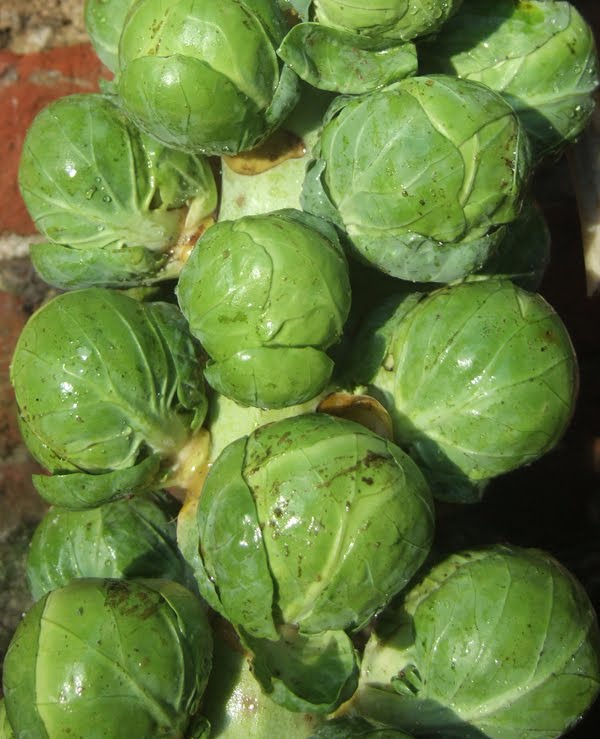
I don't grow Brussels Sprouts in my vegetable garden - I prefer to grow a selection of varieties of Kale that I'm unlikely to see for sale, around here Sprouts can be obtained fresh from the Fenland fields, for sale at markets and roadside stalls. And if you buy a whole Stick of Sprouts they'll stay fresh for ages in a cool shed or larder. I bought this one on Sunday from my favourite farm gate stall (or summer-house!) at 100 Histon Road, Cottenham near Cambridge. It's the Daddy of Veg Stalls, at this time of year it's packed with all kinds of winter vegetables everything £1/bag except Sprouts which are £2.50 a stick, and soon there will be Mistletoe too ;-)


So, for those who find plain boiled Brussels Sprouts a bit scary, here are some ideas which might change your mind . . .

Steamed Sprouts with cooked Sweet Chestnuts and a knob of butter is the classic combination to accompany Christmas Dinner. Add some crispy bacon too and it's almost a meal in itself. Left over cooked sprouts and potatoes can be fried the next day as 'Bubble and Squeak' - served with HP Sauce of course!

Sprouts aren't just for Christmas - our favourite is to add them to a Vegetable Curry. No, don't laugh!!! This is serious . . . the idea came from Cliff's favourite Indian restaurant in North London (it does still exist, but sadly not a patch on it's its glory days in the early 1990s). Find a recipe for a Vegetable Korma made with coconut milk or creamed coconut and include Sprouts with the other vegetables - delicious!

My Dad always put malt vinegar and white sauce on Sprouts (but then again he put vinegar and white sauce on all veg!). My Mum remembers a school cookery lesson in which 'the girls' were taught to make a salad of raw shredded sprouts with Heinz Salad Cream dressing (it was during WWII and she opted to do geometry and algebra instead of cookery, shortly afterwards!) I admit that I didn't like Sprouts much when I was young - but I gave them a second chance, now I love them.

Super nutritious and seasonal, hurrah for Sprouts!

Saturday, 20 June 2009

Have garden will cook

One of the first blogs I found was The Slow Cook – it's still a favourite for thought provoking articles and down to earth good sense and good recipes. I noticed the other day that PPPs is on The Slow Cook's list of links under the heading 'Have Garden Will Cook' – that sums me up pretty well, so I hope that Ed doesn't mind me nicking it as the title to this post.

I love to collect recipes that can be adapted to use whichever vegetable is in season in my garden, the other day on TV I saw Jamie Oliver cook a scrumptious looking filo pastry tart, he used asparagus but it seemed an ideal basic recipe that can be adapted to use other ingredients. This evening while the potatoes were cooking I picked some of the largest pods from the Crimson Flowered Broad Beans and the biggest mange touts from the Golden Sweet and Reuzensuiker Peas – these went straight into the steamer over the potatoes for a few minutes. I assembled the tart as in Jamie's recipe, arranging on the top the peas and broad beans instead of the asparagus. I used four eggs laid by the under-gardeners and semi-skimmed milk instead of double cream. As I was adding broad beans I added chopped summer savoury instead of the nutmeg.

This is rich and very filling, we ate it with a salad of mixed lettuce leaves freshly picked just before serving. There's more than enough leftover for tomorrow's lunch – ideal for a picnic I think!

Wednesday, 3 June 2009

Bean tops - what do you do with yours?

One of the bonuses of growing your own vegetables is that you can use all the edible parts of the plant instead of just the parts that are on offer in shops and on market stalls – salsify buds, beet tops, courgette and squash flowers . . .

and one of my favourite things, broad bean tops:

The Crimson-flowered Broad Beans are setting little pods and it's time to nip out the top cluster of leaves; I take them down to the topmost flower bud that's showing colour. Last night I picked a couple of handfuls of broad bean tops and steamed them over a pan of new potatoes (bought Jersey Royals, ours won't be ready for a few weeks), the broad bean tops are ready when they start to smell of beans. Take them off the steam and drain then.

I added the bean tops to an ovenproof pan in which I'd cooked chopped smoked bacon, onion, garlic and diced sweet red pepper. Sprinkle with chopped savoury (the perfect partner for any beans) and chive florets, make sure everything is spread evenly over the bottom of the pan. Scatter over broken up feta cheese, then add the eggs – I used five eggs and a splash of semi-skimmed milk beaten together – pour evenly into the pan and gently shake to get it mixed in. Bake in the oven until it smells delicious and looks golden and gorgeous, like this . . .


Served with a potato salad made with the Jersey Royals I cooked the broad bean tops over, mixed into plain yogurt with a spoonful of mayonnaise and lots of freshly picked and chopped Moroccan mint.

Delicious!

Sunday, 11 January 2009

The Pickled Walnut Challenge 2009

It was back in August last year that I read that The Cottage Smallholder was making Pickled Walnuts and I suggested that we get together around Christmas time to compare our PWs with hers. Just before Christmas we arranged a date, and last night the Victorian pickle fork lay in wait for the contestants . . .


Of course pickled walnuts can't be savoured alone – they need a traditional spread of cold meats and cheeses as a background for their complex top-notes. Inspired by my Christmas present – What to cook now by Valentine Warner I made leek vinaigrette using some lovely fresh fat leeks from the farm veg stall at 100 Histon Road, Cottenham and eggs from our under-gardeners of course. I had been on a foraging expedition of my favourite local suppliers and gleaned ham and haslet from Beaumont's Butchers in Fulbourn; smoked eel, a big crusty granary loaf, and some delicate spelt crackers from The River Farm Smokery in Bottisham. The ingredients for the main dish – Pork and Duck Terrine, were bought from my favourite butchers at Highgate Country Store in Willingham; where I also bought some very fine Blue Stilton and a delicious Isle of Bute Cheddar cheese. Making the terrine was a labour of love and took far longer than the recipe suggested! But it was worth every hour – and the yummy jelly which formed around the edge was heavenly!!!


Before we started tasting the 2008 pickled walnuts, we sampled Cliff's 2005 vintage PWs, these were pickled in white malt vinegar flavoured with mixed pickling spice. The vinegar had lost its harshness allowing the spices to be tasted, the texture of the walnuts was firm but soft enough to squash easily with a fork. These made an interesting comparison with the young pickles entered into The Pickled Walnut Challenge . . .

Purple Podded Peas entered two jars of Pickled Walnuts, both pickled in early July 2008. Cliff had picked the walnuts at a secret location near Cambridge and followed the pickling method described in Hugh Fearnley-Whittingstall's book The River Cottage Cookbook. Half the walnuts were pickled in cider vinegar, the rest in white-wine vinegar; both vinegars were flavoured with cloves, allspice, mixed peppercorns, bay leaves and cinnamon sticks.

THE VERDICT
size : large, almost golf ball size! maybe too big.
texture : very good, firm but easily cut to show a good cross-section of immature nut.
flavour : harsh vinegar tang, robust spicing.
summary : needs longer to mature; a well crafted traditionally flavoured pickled walnut which hopefully will mellow over the months ahead.


The Cottage Smallholder also entered two jars of pickled walnuts one in cider vinegar and one in white-wine vinegar, but with different spices. The walnuts were picked in late July from an undisclosed location near Newmarket and pickled in early August 2008, see more notes about the recipes here.

Jar A: cider vinegar flavoured with cloves, ginger, alspice, garlic, peppercorns and molasses.

THE VERDICT
size : medium, a perfect pickled walnut dimensions.
texture : the outer layer was tender but the core was perilously crunchy in places as the nutshell had already started to form.
flavour : harsh vinegar tang; the inclusion of garlic and fresh ginger gave this pickle a hint of oriental spicing.
summary : a pity that the walnuts had not been picked when younger as the flavourings are good.

Jar B: white-wine vinegar flavoured with tarragon, allspice, cloves, mace, bay leaves, garlic, peppercorns and molasses.

THE VERDICT
size : medium, a perfect pickled walnut dimensions.
texture : firm but still a good pickled walnut, maturing may soften them more.
flavour : harsh vinegar tang; the tarragon adds an anise note which is surprising in a pickled walnut and slightly medicinal in character.
summary : it will be interesting to try this pickle after further maturing as the flavourings may mellow.

As well as the miriad of PWs we had a 'guest pickle' – Cliff's Piccalilli. everyone agreed that it was a 'mighty fine pickle' and a perfect accompaniment to the terrine. More will have to made in 2009 and plans are underway to dedicate an area of the vegetable garden to the growing of picalilli ingredients!


After all that you'd think we'd be ready to lie down for a snooze! But the feasting continued . . .

You may remember that the original challenge to The Cottage Smallholder included tasting Sloe Gin, as we know she was conducting intensive field trials into this delectable liqueur. Sadly she had to announce that the Cottage Smallholder Sloe Gin was suffering from an over-dose of almond essence and had been withdrawn from the contest. Nevertheless we'd got four bottles of home-made fruit liqueur from the Purple Podded Peas cupboards: Sloe Gin, Sloe Vodka and Damson Gin all made from fruit grown in our garden; and a 'guest liqueur', Quince Brandy, made using this recipe. These all went very nicely with the winter fruit compote (dried apricots and sultanas soaked in redbush tea with a small piece of vanilla pod; then warmed through with the addition of chopped Cox's apples and Conference pears and a spoonful of local honey)served with whipped cream, slices of Panettone and the remnants of the Christmas cake.

The Cottage Smallholder went home with the Victorian Pickle Fork (maybe it will become a legendary trophy like The Ashes) and a box of blue shelled eggs laid by The Spices. If anyone is up for a challenge then get pickling! And let us know if you're up for the challenge next Christmas.

PS. Matron - the Christmas cake was tested with a sliver of Isle of Bute Cheddar - verdict: excellent!

Thursday, 16 October 2008

The squash report (part 1)

When I posted a photo of our 2008 squash harvest from the Three Sisters bed, someone asked if I could post photos of the insides of the squash. An excellent idea! Here are the two squash we have already cooked and eaten . . .

First is the long yellow squash, grown from saved seed from last year's 'Winter Festival' squash – a delightful prettily striped and spotted yellow green and white acorn shaped squash. At first I thought I had muddled up the plantlets and planted one of the 'Gold Rush' courgettes in the Three Sisters bed by mistake. But as the fruit developed I realised last year's 'Winter Festival' had cross pollinated with the closely related courgette and had produced a hybrid. We used one of the 'squourgettes' chopped up in the Picallili (a triumph!) and left the other to fully mature into a large dark yellow marrow shaped squash. I was concerned that it may be more courgette-like than squash-like and so it was the first to be taken to the kitchen . . .

. . . and here it is cut in half, oozing juices and a beautiful pale orange in colour!


I used half to make soup. I softened some chopped onion and a few chopped sage leaves in some olive oil and then added the roughly cubed squash flesh and some ground mixed peppercorns.

I then added some home-made chicken stock and simmered until the squash was tender. A quick whizz with the stick blender and we had a delicious light squash soup. There was a hint of cooked courgette flavour alongside the light nuttiness of the squash, the colour was a glorious sunshine gold – an excellent Saturday lunchtime soup. The remaining 'squourgette' was boiled until tender and served as a tasty side vegetable with the Sunday roast.

Now for the 'Marina di Chioggia', grown from seed saved from last year so maybe not quite true to the original. This isn't the most attractive of squash, being green and warty but the smooth texture and intense flavour of the flesh was my favourite of last year's harvest . . .

. . . here it is cut in half

Lack of sun this summer probably accounts for the flesh having a tinge of green rather than being deep golden orange, but nevertheleass a fine squash!

I made soup with half of the 'Marina di Chioggia', as above but using pheasant stock and thickening it by adding two broken up rice cakes (thank you Hugh Fearnley-Whittingstall – top tip!) just before blending. The colour wouldn't win any prizes – a sludgy ochre – but shut your eyes and the flavour and texture was wonderful. With the remaining squash we mashed some with potato to top a Shepherd's Pie and roast the rest to accompany pork chops. The texture of the flesh is quite dry and would suit recipes needing a firmer flesh – risotto or gnochi maybe

We have another larger 'Marina di Chioggia' squash and the nameless giant orange one (earmarked for Hallowe'en) left. Recipe suggestions welcome!

Monday, 6 October 2008

Tea time treats

On Saturday we met friends for lunch at The Dyke's End in Reach, the pub lived up to it's glowing recommendations. We wanted to try all the 'light lunches' on the menu – so we did! We ordered all six and shared them between the four of us and we had room for 'afters' – sticky date pudding with butterscotch sauce. The waitress probably spotted we might be 'trouble' when I was egged on to wear my birthday present . . . a Gisela Graham felt hen tea cosy.


Later in the afternoon we went to Anglesey Abbey to see the water mill. Although the mill was still open the millers were just packing up for the day, so we missed seeing the corn being ground, however we did buy some of the flour freshly milled from Hereward winter wheat grown on the Wimpole Estate south of Cambridge. The bag of flour came with a recipe leaflet, one in particular sounded especially delicious:

Patrick Anthony's Sultana & Pecan Nut Bread
This was demonstrated on 8th July 1996 in Anglia TV's live broadcast from Anglesey Abbey commenmorating the 100th anniversary of the birth of the 1st Lord Fairhaven. It also celebrated his rescue of Lode Watermill from dereliction, it's repair and landscaping. This recipe celebrated his American roots.

mix together in a large bowl:
400g wholemeal flour
1 teaspoon salt
1 teaspoon mixed spice
75g sultanas
50g chopped pecan nuts
50g brown sugar

then add:
2 tablespoons sunflower oil
1 tablespoon honey
500ml buttermilk with 2 teaspoons of baking soda mixed into it.
(I used semi-skimmed milk as that's what I had at hand)

mix thoroughly and pour into an oiled loaf or cake tin
and bake at 180C for an hour

serve buttered

Even better, serve toasted and buttered with a nice cup of tea :-)

Tuesday, 15 July 2008

Inspiration for lunch

When Silver Pebble visited my studio on Sunday I gave her and Miss P2 a tour of the vegetable garden. It was hard to ignore the Tuscan Black Kale with leaves like blue-green ostrich plumes; she recommended that I try a River Café recipe and this morning I received an email with a link to the recipe. I know, it's one of those 'in' veg, you can't go into an book store or supermarket without seeing a certain much hyped chef peeping coyly through a bunch of Cavolo Nero. It's usually grown as an autumn and winter vegetable and some books say it's better harvested after the first frosts, but my packet of Italian seeds said sow any time from February through to July and harvest all year. Does Tuscany get much frost? Maybe. Anyway, I've been picking the beautiful green leaves for weeks now and think they're a great early summer addition to the vegetable garden. It's also very good for you: high in vitamins A, B and C, high levels of beta carotene as well as calcium, folate, iron, magnesium, niacin, pantothenic acid, phosphorus, potassium, thiamine and zinc.

A quick search in the kitchen cupboard found some slow dried trofie pasta, too little for two portions but just enough for my lunch. While the pasta was cooking I ran out to the veg garden and picked a handful of Cavolo Nero (and I must say they looked a lot healthier and more beautiful than the rather small and manky leaves on that book jacket). I called an under-gardener over and she obligingly removed a large caterpillar from one of the leaves.

I didn't follow the recipe exactly, neither did I measure out the oil. My version included a handful of freshly shelled peas (Victorian Purple Podded and Salmon Flowered) cooked with the cavolo nero leaves and garlic. A quick whizz in the food processer and the addition of a glug of olive oil transformed the ingredients into a vivid green sauce.

With the addition of a sprinkle of pine nuts, some cherry tomatoes (not grown by me) and some shavings of Manchego cheese (weekend party leftovers) this looked like a dish fit to be served at River Café or Moro or whichever lunchtime eatery is fashionable this week.

Before I sat down to lunch I snapped a quick photo . . .


. . . thank you Silver Pebble – well worth trying!

Sunday, 9 December 2007

Quick! - we've just got time . . .

Yesterday I suddenly realised that if I didn't go to see the Richard Bawden exhibition at Gainsborough's House in Sudbury right away I would miss it! Richard Bawden is well-known as a skilled printmaker and designer – I love his strength of line, pattern and witty observation.

Nearly 3.30pm and we'd been shopping for most of the day, but if we're quick we'll have time! It was dark and rainy as we drove into Sudbury town centre, the traders were packing their vans in the market place, but hurray! there was a free parking place in the street right outside Gainsborough's House it was just after 4pm – almost an hour to enjoy the exhibition.

I felt revived and inspired - those joyful images of cosy cats on patterned rugs and rambling Suffolk gardens; glass bowls engraved with prancing cats and swooping owls; a garden bench with dodos beak to beak; subtle shaded etchings of trees and fading flowers. If you have the time the exhibition continues until Christmas Eve.


Back home – time for tea (dinner? supper?) - whatever – we're hungry and need food quickly! I'm sharing this recipe with Freddie and Charlotte of The Great Big Vegetable Challenge, for their Q is for Quick Veg Quest.

Monday, 19 November 2007

A Potato Pagoda for Freddie

I'm not one for dressing up a baked potato, so when I was invited by Freddie and Charlotte to join The Great Big Baked Potato Challenge I wasn't inspired. But as my systematic advance through the tidal wave of work in my studio was going well and on schedule I had time to be creative with my supper of baked potato and Sunday leftovers before I go to the Tai Chi class.


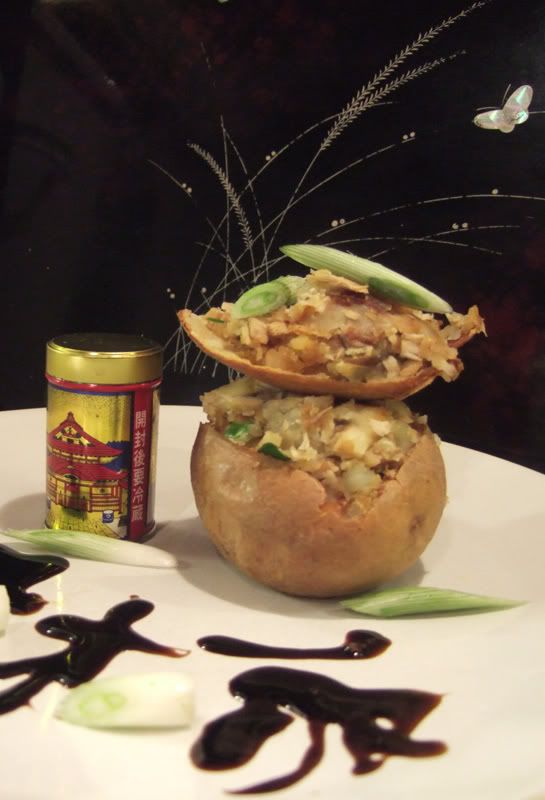
Here's how to make a Potato Pagoda . . .

Cut a wedge shape out of the baked potato and carefully scoop out the cooked flesh from both pieces. Stir fry mushrooms, cooked guinea fowl (chicken will do fine), shredded fresh ginger and chopped spring onion. Gently mix in the potato flesh and season, I used my favourite Japanese 7-spice 'Shichimi'. Cook through and season with soy sauce. Fill the potato skin and the wedge with the mixture and balance the wedge on top. The calligraphy on the plate was intended to read 'Tai Chi' - but it probably doesn't!

And after that deliciously warming supper it's time to go to Tai Chi . . . Step-back-and-repulse-the-monkey . . . The-golden-cockerel-stands-on-one-leg . . . Box-the-tiger's-ears . . . I feel calm, balanced and grounded :)

Sunday, 18 November 2007

Backstage


Behind the display on my stand at Saturday's Arts & Crafts Fair in Reach Village Hall, my supply of small change was efficiently tidy and I was sustained by the delicious (and nutritious) flap-jacks and the unbelievably delicious mulled fruit juice*.

Thank you to everyone who came along!


LATEST NEWS:
In two weeks time on Saturday 1st December I will have a stall at the Arts & Crafts Fair in Saffron Walden Town Hall.
So if you're in the area why not get in the festive spirit in this historic market town - lots of lovely shops, delis, cafés and the traditional market in the square outside the Town Hall.


* The girls in the kitchen told me it was equal quantities of apple juice and orange juice with some thinly peeled orange and lemon skin (peel? zest?) and sachets of mulling spices. Heat through and serve. Other versions they recommended use black grape juice with the apple and orange and an orange studded with cloves, cinnamon sticks and fresh ginger.

Thursday, 25 October 2007

Pumpkins. . . Squash. . . Cucurbits. . .

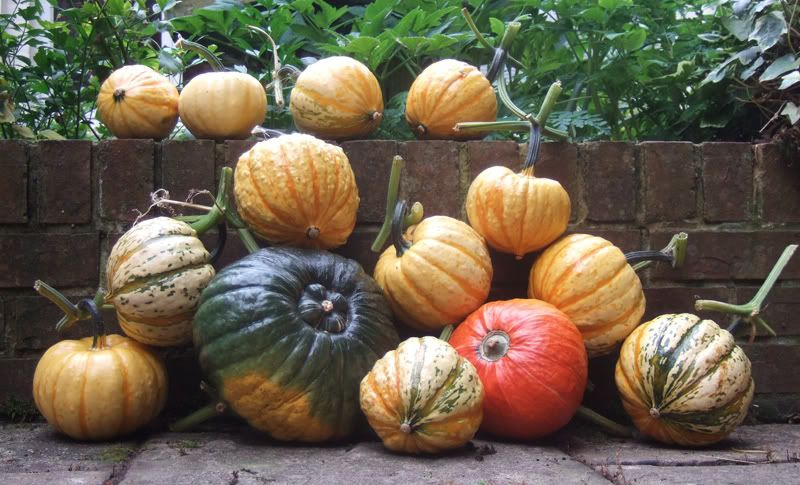
Whatever you call them they are the vegetable of the season. This is our 2007 Squash Harvest. The huge dark green one is the fabulously tasty "Zucca Marina di Chioggia" (and with a name like that so it should be!), such a shame there's only one. The lovely stripy yellow ones are "Winter Festival" - not quite as flavourful but a good size to cook stuffed. The lovely dark orange one with the grey/green centre was a bit of a surprise! Either I lost the label or it was a rogue seed. If anyone recognises it, please let me know.


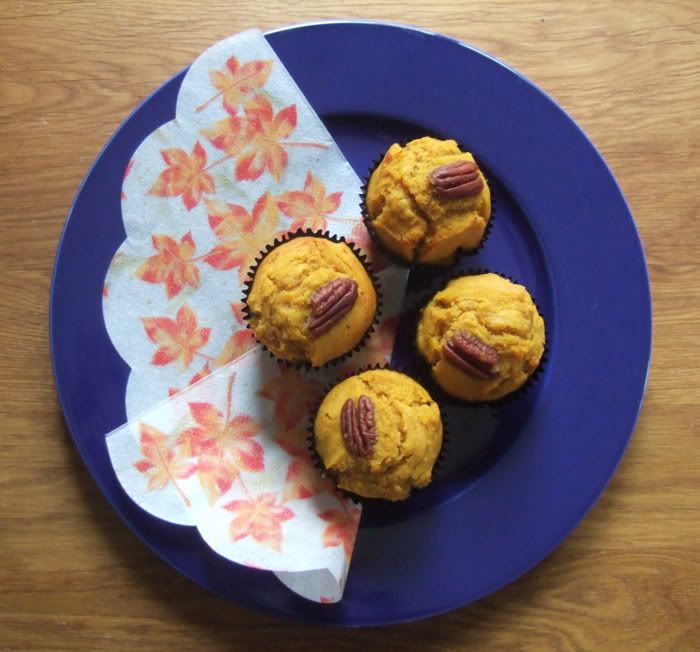
On a cold dark autumn evening what could be better than squash risotto, or squash and potato mash, or squash soup, or squash added to a curry or tagine, or these squash, raisin and pecan muffins.


Hannah has requested that I post the recipe (I'm in awe of Hannah's baking skills, so if you want to see some treats visit her blog). So here goes, I haven't time to unscramble the mixed measurements - this is just how I do it!
In a bowl sift 5 oz plain flour (I used half wholemeal/half white), half a desertspoon of baking powder, 1 and a bit oz caster sugar and a sprinkle of mixed spice.
In another bowl put 2 eggs, a third of a cup of sunflower oil, two thirds of a cup of semi-skimmed milk, about two cups (I didn't measure this) of cooked squash (I bake squash in the oven then de-seed and skin). Beat together with a balloon whisk.
Sift the dry ingredients into the wet ones. And fold gently together, add some raisins as you do this, you must not stir too much, leaving bits unmixed is good.
Spoon into muffin tins and decorate with pecans. Cook at about 190 C until they have risen and smell delicious and a bamboo skewer stabbed into the middle comes out clean! Enjoy!

On 30th October 2007 that amazingly talented gardener, Matron of 'Down on the Allotment', is hosting a Squashblog, a chance to see cucurbits of every shape and colour from garden bloggers around the world!

31st October 2007 . . .
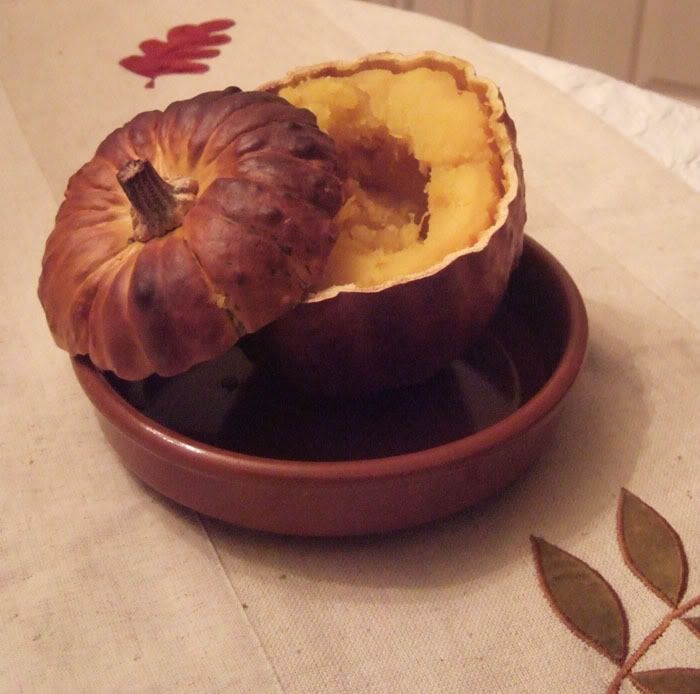
And this is our Halloween Pumpkin - a "Winter Festival" squash baked whole in the oven. Carefully cut off the lid and scoop out the seeds and fill with the flesh from the lid . . . and . . . izzy-whizzy!!!*!*!*!*!*! An instant ready-filled pumpkin tureen!

Friday, 21 September 2007

Shades of indigo

At the Harvest Lunch in the village the conversation turned to the weather (inevitable in an English social situation) and its effect on our vegetable gardens. We agreed that it had been a very bad year for outdoor tomatoes and that no-one had a glut of courgettes. We also agreed that beans had done very well, but that the season for green beans was just about at an end – when I suggested using the mature beans shelled from the pods there was a pause in the chatter "Oh, can you do that?" someone said. Maybe I had overstepped the mark and alluded to a peasant style of cooking that civilized people had left long behind?


These beautiful shiny beans in shades of indigo are the semi-mature Poletschka beans (a climbling bean from Ukraine from the Heritage Seed Library) grown in our vegetable garden. Impressed by the tender and sweetly flavoured green pods I decided to save lots of seed for planting next year. But I had to try the flavour of the beans before they dried, after all flageolet beans - fresh haricot beans - are a gourmet dish in France traditionally served with lamb.

Supper last night was my nouvo-peasant recipe, "Chicken Poletschka":
Two large spring onions (scallions) chopped and cooked in a little olive oil in the trusty Le Creuset shallow 'buffet' casserole. Add skinned chicken joints, two whole unskinned garlic cloves, sliced mushrooms, cubed aubergine - home grown :), fresh shelled Poletschka beans, cook on a gentle heat until chicken is browned and the mushroom and aubergine lightly cooked. Lay slices of tomatoes over the top - home grown Marmande tomatoes :), and sprinkle with finely chopped fresh savoury, THE herb for beans, and black pepper. Add some boiled water to just below the level of the tomatoes. Cover and cook in the oven for about 45 minutes or until the veg has been prepared and cooked and "The Archers" has finished. Excellent accompanied with mashed squash and rainbow chard.

Poletschka beans cooked in a casserole or soup are plump and delicious, and the indigo colour turns a warm pinky brown. Don't knock peasant food!