Celia Hart's blog about what's going on in and around her studio.
Art, printmaking, inspirations, gardening, vegetables, hens, landscapes, wild flowers, East Anglia, adventure, travel.

Thursday, 24 February 2011

Wake up!

Did you notice? The switch was thrown today and flowers opened, ladybirds and bees appeared, the air felt ever so slightly warm, the sun shone and birds sang.

There have been hints of spring, the occasional sunny day, winter aconites and snowdrops, a robin singing; with a chill wind blowing that wasn't proper spring . . . but this is!

Ladybirds are everywhere!
Crawling out from the crevices they've
hidden in
over the long cold months.


The feral honey bees that took up residence
in our next door neighbour's high chimney

woke up today and buzzed around in a cloud

before finding flowers to feed in.


Last year I made some videos in The Wild Wood (our small patch of woodland that is our window onto the outside world) today I thought I do another film to record The Wild Wood waking up on the first proper spring day of 2011.


Tarragon is so busy supervising his little flock!
The under-gardeners and Spice Girls are

all laying again after their winter break.

There were four eggs in the nest today :-)


Celia
x


Thursday, 17 February 2011

Labour of the month: February

We're more than half way through February, time for another Labour of the Month on PPPs – something that for me signifies the time of year in my garden or kitchen.

But first, I've been thinking . . . how do you see your garden? I mean, how do you picture it in your mind? Is it a series of photographs or a plan or diagram? For me a two dimensional representation seems inadequate, a garden is more than that, you need to see the garden in 3D and then add a 4th dimension – time.

I see the garden as music – a composition for a large orchestra with various movements and occasional solo parts for different instruments or voices, with sometimes a choir and complex ensemble crescendos (I wonder if this is a kind of synesthesia).

After the conductor/gardener has tapped her baton and settled the potatoes into trays to chit at the end of January, the opening notes of the overture start in February and I walk through the green door in the wall, into the vegetable garden – for me February means . . .

Sowing Broad Beans
I know that the gardening books will recommend
an autumn sowing direct into the soil outdoors
but this is how I do it and it works for me.


I carry with me seeds saved from last year's crop of Crimson Flowered Broad Beans – I've noticed that the pale green beans produce the deep red flowers, if the seeds are buff or darker brown then the flowers had cross pollinated with another variety and this year would produce white or dusky pink flowers.


A mixture of colours is nice, but I want to keep this heritage seed as true as possible, so I pick out the green beans to sow into pots of compost in my greenhouse. I plant three beans just below the soil surface in each pot (yes, I know that's cramped - but this method works in our garden) that's 90 beans planted – plenty for me and some to give as small plants to friends . . .


Now the music has begun – another season – another year – another orchestration!


Celia
x


Sunday, 13 February 2011

Connecting paths

Early this morning I was browsing through The Guardian online and came across an article about clutter. I read out bits of it to Cliff - we are both by nature hoarders - and Cliff dubbed 2010 as our "year of clutter" because we had acquired even more 'stuff' from a family house we had to clear for sale. We both agreed that 2011 should be our "year of de-cluttering". We're not going minimal, just getting back to a reasonably tidy state of affairs.

For starters, I said that my stash of life drawing could be ousted to free up more storage room for new prints in my studio plan chest; Cliff was going to throw out his school and university exercise books and notes . . . and he made a start straight after breakfast! (I have yet to tackle the plan chest).

Among Cliff's university stash was a small white booklet . . .


This is the introduction . . .


The concertina pages each have a typographic poem inspired by sea-shells . . .


"You mustn't throw that away!" (I needn't have worried – he wasn't going to) I wanted to know where it came from . . .


The book had been bought at a gallery near the Hadrian's Wall long-distance footpath when Cliff and some friends walked the whole length in September 1975 – apparently the wettest September on record; he remembered talking to a man – and admiring his enthusiasm. That man must have been LYC, or Li Yuan-Chia – a Chinese artist who worked at Brampton Banks from 1972 t0 1983; during that time 300 artists exhibited their work there and LYC designed all of the catalogues. Why hadn't I heard of him? Why was he there, in the wilds of Cumbria? I wanted to know more!

We found out that he bought the farm at Brampton Banks from his supporter and friend Winifred Nicholson – "Have you heard of her?" Cliff asked me – I looked round at the back of my office door, it's covered with postcards of paintings by Winifred Nicholson!


A little de-cluttering can unearth unexpected things about people you think you know well!

Celia
x

Tuesday, 8 February 2011

Man-made landscapes in Suffolk

Wasn't it a glorious morning! A bit chilly – there was frost on the grass – but the deep blue sky and bright sunshine was perfect . . . because I had planned a day jam-packed with treats.

After breakfast I headed off in the car to Ickworth Park . . . full of magnificent trees


At the park kiosk I was handed a little slip of paper with directions on it – you see, I wasn't here to just wander about – my neighbour had asked if I'd like to join her at a grape-vine pruning workshop; and, although I'd already hacked back the vines in my kitchen garden, I thought it sounded like a good way to spend a morning.

So off I drove through the park (visitors aren't normally allowed to do this, but you can walk the same parkland tracks) past the impressive elliptical dome of Ickworth House


Down the hill past the estate church to the walled garden that is now home to Ickworth Vineyard


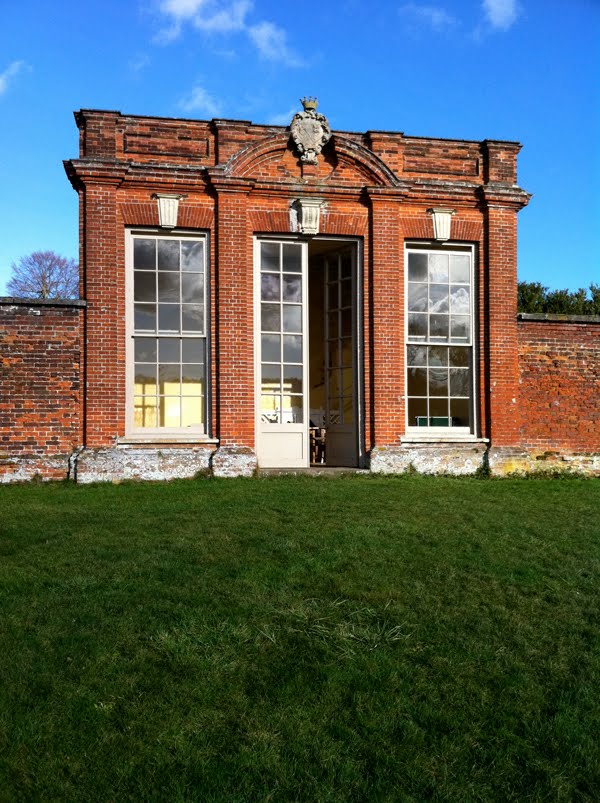
There were five of us amateur vine owners, wanting to learn the art of pruning from expert Jillian Macready, who with her husband Charles planted and tends to the vines both here and at Wyken – another famous Suffolk vineyard. First we walked down the gentle slope towards the lake and settled down for a chat in the Earl of Bristol's Summerhouse.


Then armed with our secateurs and loppers we set off to prune the Rondo grape vines under Jillian's guidance . . .


. . . we learned about poles and cordons and spurs – growth that was too weak, too vigorous or just right – balancing the vine and thinking about how it will grow not just this year but in the future.

Most of all I learned that no vine ever looks like the diagrams in the books, and even under expert care they often don't grow how you want them to – rain, frosts, sun, drought can't be controlled! And there's so much more to find out, like 'bud rubbing' and 'canopy control' which we didn't even touch on in today's workshop! But it was a great morning, worth it to spend time working in such a stunning setting on a beautiful sunny day.


Before going home, I decided to pop into Bury St Edmunds – to the newly re-branded town art gallery Smith's Row . . .


to see the art installation that everyone is talking about


Sweet, sweet galaxy by Pip & Pop


. . . look closer – be amazed!


It's no wonder that everyone leaving the gallery
has a great big smile on their face!

Celia
x

Saturday, 5 February 2011

Got a new motor!

I'm not really into cars, but I've decided to replace my 10 year old Renault; I've mooched round car dealer's yards, looked at web sites, read magazines and motor sections in the weekend newspapers – but I haven't got at all excited :-(

You see, part of me would like something funky and retro, a quirky sporty little car (completely unsuitable for the place I live in and my lifestyle); another side of me would like something utilitarian and workmanlike, a van or a ute (but it probably wouldn't fit in the garage and I'd hate trying to park in the multi storey car park in town). Dilemma . . .

This afternoon I decided to stop thinking cars and get on with something useful, like hemming Cliff's new Boden chinos and that meant test driving this . . .

A classic motor c. 1973, one careful lady owner (Cliff's aunt)


Well designed with clever storage space


Funky styling


French engineering


Complete with the original manual


Yes! it's a Singer Starlet 353 and it drives like a dream :-)


We brought it home from Liverpool last year in a battered old cardboard box and up until today I hadn't really looked at it or decided what we'd do with it. It's a gem! And I'm very happy to give it a loving home with my other vintage manual Singer sewing machine which was my Gran's (the machine with which I've stitched everything – most of my clothes throughout the 1980s, all the curtains in all the houses I've lived in, theatre costumes and even my wedding dress).

I think the Starlet will have to be my funky classic little motor . . . now, perhaps I can make a rational decision about which car to choose from all those 206-C4-3008-1.6-crossover-super-mini-hatchback-picafocuzarara-sports-look-a-likey motors I've seen on the forecourts!

Celia
x

Tuesday, 1 February 2011

An anthology of English history

Today I was in Long Melford again, delivering Landscape East jewellery and my cards to the JM Gallery; it's right in the centre of the village's main street – a long ribbon of quaint houses, shops and pubs.


At the northern end of Long Melford is Melford Hall and park; opposite it the row of candy coloured cottages sit back behind a wide green.


At the top of the hill, near another Tudor mansion – Kentwell Hall, is the splendid church; all of Suffolk's churches are treasure houses of history but Long Melford church is one the best 'wool churches' – built when the county's landowners and merchants were rich beyond their wildest dreams from the sale of fleece, yarn and fine cloth.

I decided to stop there for a while and enjoy dipping into an anthology of English history . . .

Of course, inside the building is a conceit of what a Victorian clergyman wanted a Gothic church to be – with patterned encaustic tiles on the floor . . .


And stained glass windows of knight and ladies (made up of fragments of medieval glass that has been smashed, salvaged and restored) . . .


Does that lady on the left look familiar? Did John Tenniel find his inspiration for the Queen of Hearts, in his illustrations for 'Alice in Wonderland', in this window? It's a good story, I hope it's true.


High up above the north door is the gem of Long Melford's stained glass – no, not the three panels showing monks and buildings, but that teeny little roundel!


Here's a close up so you can see the famous three hares, their shared ears forming a triangle – symbolic of the Trinity? or maybe something from an ancient pagan past. The three hares symbol is found in churches in Cornwall as well as art in the Middle East and China.


Behind the altar is a carved reredos – not Medieval but commissioned by a Victorian rector from an Italian stone carver, however the design is based on a painting by Albrecht Durer . . .


. . . that's except for the lady in Victorian Sunday best! (Supposedly the rector's mother, well, she did stump up the cash to pay the artist.)
In a corner chapel is a much spruced up medieval tomb of a knight in armour – William Clopton, Lord of Toppesfield Manor. In 1436 he granted land for the town of Hadleigh to use for a market . . . and the rent? One red rose a year!


The Mayor of Hadleigh still pays his due every year (and when the flower fades an artificial rose is put in its place until the next year) – it's the oldest rent still paid anywhere in the UK.


Returning to the main door I passed a framed picture and my 'original print antenna' beeped into action – an original lithograph by John Piper . . . it's well worth a look.


And I must thank the very knowledgeable attendant on duty at the visitors' desk in the church today – the building has so many stories to tell!

Celia
x

Friday, 28 January 2011

When 3 bloggers went in search of snowdrops . . .


. . . and found much more


. . . including sunshine and cake*


A Magic Cochin production starring
Silverpebble and Fan My Flame


Location: The Winter Walk at
Anglesey Abbey in Cambridgeshire


* Gina did not eat any cake, she just had a cup of tea


Tuesday, 25 January 2011

Love in the air

When I was catching up with the galleries that sell my prints and cards I was asked if I had any Valentine's Day cards. It got me thinking and and one evening an image popped into my mind – I quickly scribbled it down in my sketch book.


Yesterday afternoon I quickly scanned and sized the image, made a few tweaks to the composition (I wanted a square design) and transferred it onto a piece of lino. The design was only roughly sketched, so each cut was a step into the unknown; by the end of the day I had a finished carved block ready for printing. I very nearly worked late printing the block right away – I was in the zone! But instead Cliff and I sat down at the studio computer and booked a little holiday, something nice to look forward too :-)


I didn't sleep well, my mind was a bit buzzy from the intensiveness of the carving and excitement about a holiday, so I lay awake thinking about colours.

This morning I got the inks out: Crimson and Yellow Ochre


Made a lovely rich red


Rolled the ink out on the glass


Inked the block


And printed a new design for Valentine's Day


The original limited edition unframed prints can be ordered by emailing studio@celiahart.co.uk
This is a small edition of 20 prints on Japanese Kikuchi Haini Kozo Koban (a beautiful paper made from the fibre of the Paper Mulberry). The image size is 15 x 15cm. Each print is named, signed and numbered in pencil by me. An unframed print costs £48 (including p&p to addresses in the UK mainland).

Cards are now for sale in Magic Cochin's Emporium click here for details


Celia
x

Monday, 24 January 2011

Ready, get set, grow!

For me, the vegetable growing year begins when I buy seed potatoes. So many to choose from but only so much space I want to put aside to grow them in!


I had to be rational about this . . .
1) I want an early potato with an excellent flavour
2) I want a potato that I know will do well in my garden
3) I want good salad potatoes through the summer
4) I want to try something different
5) I want to grow some old fashioned potatoes

Here's this year's selection, settled into their egg boxes all ready for chitting.


INTERNATIONAL KIDNEY
aka Jersey Royal if it's grown on a cliff-side in Jersey. This always does well in our garden, it survives drought well and the foliage is lush and a lovely shade of green. Good potato flavour and a large crop of medium sized smooth tubers.

RATTE
aka Asparges. The French gourmet salad potato, some years it's hard to track down (I substitute with Charlotte and Pink Fir Apple) so I was thrilled to see it available this year. It has a lovely pale yellow flesh with a waxy texture – the flavour is actually best when eaten just warm or cold.

DUKE OF YORK
I've grown this before but not in this garden, so it will be interesting to see how it does. It has been on the 'national potato list' since 1891 and has been a popular choice for allotments and back gardens because it's a great all-rounder for the kitchen, with a great flavour.

SHARPE'S EXPRESS
This is one of the potatoes I remember from my childhood, I remember dropping the potatoes into the holes my Dad dug. It's named after Charles Sharpe of Sleaford, Lincolnshire who introduced it in 1900. Best boiled whole with the skins left on, I'm hoping for that quintessential 'new potato' flavour.

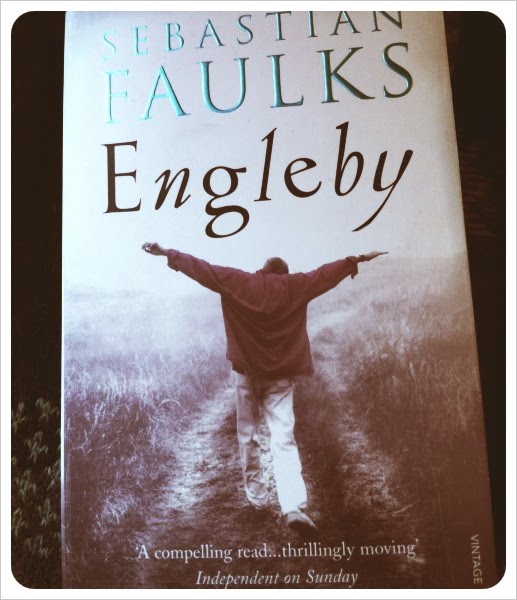
I bought my seed potatoes from Oakington Garden Centre on the Fen edge just west of Cambridge, where there are 30 varieties to select from – be quick though, they'll sell out pretty fast! If you've read Engleby by Sebastian Faulks, you'll recognise the roads you drive along to get there – and the scenes described in chapter 10 happened hereabouts in the flat muddy fields.


I also bought onion sets: Red Baron and Sturon; shallots: Picasso and Golden Gourmet; and garlic Fokhagyma – a Hungarian variety that has been grown since the 15th century, I'm looking forward to trying this!

Now I really feel the vegetable year is underway and I'm looking forward to sowing seeds, digging the soil and constructing structures to protect and support the crops.

I'm also looking forward to reading a different novel – something to lift me out of the dark fen mists and troubled mind of Engleby. Any suggestions?

Celia
x